THE RETIREMENT CAFÉ
By Ernie J. Zelinski
|
|||||||||
RETIREMENT ADVICE
Maurice Musholt at one time had many fears about retirement. She feared that retirement would be one big rocking chair with nothing more to do and not knowing where to retire. After nearly two years of touring the country in a motor home, Maurice and her husband Wayne settled in Sun City Center, a Florida community of 16,000 retirees. They were lured by climate, 200 civic and social clubs, 144 holes of golf on seven courses and, 25 miles north in Tampa Bay, an array of spectator activities such as museums, professional sports, and performing arts.
At 58, the retired elementary school teacher from Rockford, Illinois, told a reporter that she discovered a whole different lifestyle from what she had expected. "We have no porch, no rocking chair — and no time," Maurice said. "My biggest need is a calendar because there are so many things to do. Now I encourage people to retire — the younger the better." Maurice Musholt is right. You are never too young to retire and you can always come up with fun things to do when you retire. The bottom line is that if you want to fill your retirement days with a lot of retirement activities, you should retire by age 55 or 60 if at all possible. Waiting until you are 65 may mean you don't have the vigor, enthusiasm, and health to enjoy it. Poor health can limit the types of activities you can pursue. What's the point of building an impressive nest egg for forty years only to discover that you aren't in adequate health to enjoy the advantages and opportunities that retirement offers?
Early Retirement
This may come as a surprise to you but your retirement plan should allow for your involuntary early retirement. Why? Many people are forced into early retirement many years earlier than they had planned to retire. "Oh, this won't happen to me," is the response of many baby boomers. That is dumb thinking. Fact is, that was exactly what those baby boomers were thinking at one time to whom involuntary early retirement has already happened and they were forced to make their retirement speech. Here are some retirement statistics in regards to how many people retire early from a recent Employee Benefit Research Institute’s Retirement Confidence Survey:
Here is the bottom line: Even if you think that you are going to work until 65 or 70, you may be forced to take early retirement at 61 or 59 — or even younger. Ensure that you work this into your retirement plan and then enjoy all the advantages of retiring early.
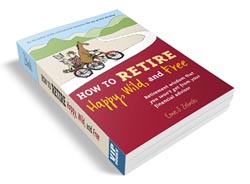
Note: This is exerpted from How to Retire Happy, wild, and Free (The World's Best Retirement Advice Book).
Hammond Stith, 61, had this to say in 1998 after he had taken early retirement and had been retired for four years:
Now 42, she devotes a lot more time to her husband, Michael, and her two children, Connor, 10, and Annie, 14. Recently, the whole family vacationed in Turkey for 18 days. She also works out, plays basketball in the backyard, takes art classes, and is involved in community work.
Above all, because she took early retirement, Felt-Barton is a lot more relaxed than she was when she was working. Indeed, her two children think she is less uptight and a much nicer person than she used to be. She also feels that there are many fun things to do in retirement. In 2002, Felt-Barton told a USA TODAY reporter, "There are so many other interesting ways to spend your time. I feel like this is a gift, but it's such an incredible [retirement] gift. It's a gift I need to use."
Being Retired Can Be the Best Thing That Ever Happened to
You
Kirk Symmes had never planned on what he was going to do in retirement because he thought that he would continue to work forever as a computer salesman. At the age of 65, however, he was forced to retire when his company laid him off. He had no idea what to do with the rest of his life so he got involved in as many retirement activities he could. This included taking several classes at the College for Seniors, a department of the North Carolina Center for Creative Retirement at the University of North Carolina.
Symmes always had a fascination with history — in fact, he graduated with a bachelor's degree in the subject from Yale in 1948. Thus, one of the courses he took at the College for Seniors was 100 Decisive Events of History. Soon after, he learned that the college was looking for instructors — not necessarily instructors with Ph.D.s, but retirees who might enjoy teaching other retirees. Although he had never taught a class before, his proposal to teach an eight-week seminar called "Origins of the U.S. Bill of Rights" was accepted.
His first class did not go as smoothly as he would have liked. "I read more than I talked," Symmes told the Wall Street Journal. Nevertheless, he did not turn off any of his 45 students enough to keep them from attending the second class. In fact, with a little more practice, he became an excellent instructor. Over the next six years he taught six courses, including four about Thomas Jefferson — his favorite subject. "It really is a very satisfying experience to have a little bit of knowledge that people are interested in," declared Symmes. And he was only half-joking when he added, "If I had known retirement would be this great, I would have killed to have gotten here sooner."
If You Don't Like Involuntary Retirement, Sue the Pants Off the Company Off the Company That Forced You Into It This is not necessarily the best advice for retirement: If you don't like involuntary retirement, sue the company that forced you into it. After having worked for 31 years for Abbott's Ross Products Division in Columbus, David Jelinek, in his mid-fifties at the time, retired involuntarily from his sales job. In 1997, a year after he was the company's top-performing salesman, the company eliminated some positions to cut costs. The oldest sales manager and the one with the most seniority, Jelinek was making $100,000 annually selling Ross Products nutritional supplements for seniors to doctors.
The company told Jelinek that his position was surplus and that he had to accept a transfer to Gary, Indiana. The Gary position was the only offered, but Jelinek felt the sales district had no potential because it suffered from a lack of customers. In March, 1998, Jelinek told Ross that if there were no other positions, he would resign and consider himself "constructively terminated and involuntarily retired."
Shortly after he left the company, Jelinek filed an age discrimination lawsuit in which he
claimed that he was forced into early retirement. He was subsequently awarded $25.7 million by a jury in
Franklin County Common Pleas Court on April 2, 2002. "The jurors thought they had to send a message," said
59-year-old Jelinek, after speaking with several jurors about the verdict. (Abbott Laboratories told reporters
that it would appeal the verdict because it was "not supported by the evidence or the law.")
Earn Your Retirement Karma
Points by Reading The World's Best Retirement Advice!
Purchase How to Retire Happy, Wild, and
Free Today:
| |||||||||
|





Author of The World's Best Retirement Advice Book
All Rights Reserved
OVER 400,000 COPIES SOLD

Purchase:
How to Retire Happy, Wild, and Free on Amazon.com
and
How to Retire Happy, Wild, & Free on B&N.com

OVER 310,000 COPIES SOLD
Purchase:
A CAREER BOOK FOR RETIREES WHO WANT TO WORK IN RETIREMENT BUT NOT IN CORPORATIONS
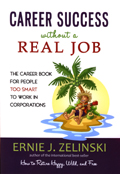
CAREER SUCCESS WITHOUT A REAL JOB
Purchase: